
August 12, 202611 min read
How to Verify Renters Before the Keys Move
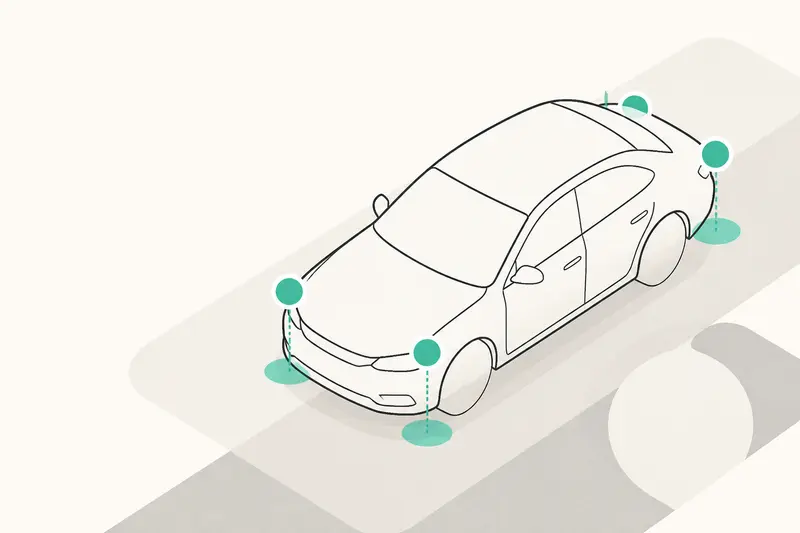
Quick answer: Verify every renter with the same five checks before pickup: (1) a government-issued photo ID that matches the person taking the car; (2) a valid driver license, checked for expiration and ideally verified with identity-verification software; (3) confirmation of how trip damage will be covered, arranged per your licensed broker’s guidance; (4) a signed rental agreement, no exceptions; and (5) a refundable deposit held on a card before handoff. Add a dated photo walkaround at pickup and return, and apply the identical checklist to every renter. Anyone else who will drive goes through the same five checks and onto the agreement as an additional driver. Keep the verification result, the signed agreement, the deposit record, and both sets of photos together against the booking, because that file is what decides a dispute months later. Consistency is what makes the process both effective and fair.
The renters who damage cars, rack up tolls, or disappear are a small minority, but they are expensive, and almost every bad-renter story starts the same way: a check that got skipped because the person seemed fine. Marketplaces run screening for you; the moment you take direct bookings, screening is your job. This guide is the checklist. It is written for independent operators, it makes no legal or insurance claims, and it applies whether you rent one car or forty.
What are the five checks, in order?
1. Identity: the person is who the booking says
A government-issued photo ID, checked against the face in front of you (or a live selfie match, if you verify remotely). The single most common thread in rental fraud is a booking made under one identity and a car collected by another. The renter on the ID is the renter on the agreement is the person taking the keys; any mismatch is a stop, not a judgment call. Verification software makes this check automatic at booking time by matching a selfie to the document and checking the document’s security features.
2. License: valid, current, and theirs
Expiration date, license class, and the same name as the ID. Manual inspection catches the obvious problems, but a licence or ID card can be counterfeit or altered, which is exactly why real-time services exist that check the document’s data against the issuing agency’s own records rather than against your eyesight (AAMVA, Driver’s License Data Verification Service, accessed August 13, 2026). If a renter offers excuses for why the license photo does not look like them, or produces a photo of a license rather than the license, decline the rental. Only verified drivers drive: if a spouse or friend will also drive, they go through the same check and onto the agreement as an additional driver.
3. Coverage: confirmed before, not after
How damage gets covered on a trip is a question for a licensed commercial insurance broker, because the requirements and workable patterns genuinely vary by state and by how you operate. What is universal is the operational rule: whatever your coverage setup is, it is confirmed before the keys move. Common patterns operators use include keeping proof of the renter’s own policy on file or offering trip coverage during booking. This guide makes no coverage claims and is not insurance advice; build your requirement with your broker, then enforce it on every single trip.
4. Agreement: signed every time, no exceptions
The rental agreement defines liability, damage responsibility, mileage and toll terms, and what happens when things go wrong. It should be drafted or reviewed by someone qualified in your state, and it should be signed before every trip, including rentals to friends and repeat customers. E-sign at booking removes the last excuse for skipping it: the renter signs from their phone before pickup is even scheduled.
5. Deposit: a real hold on a real card
A refundable security deposit, taken as a card hold before pickup, scaled to the vehicle class. The deposit does two jobs: it funds small claims like fuel and cleaning without a fight, and it screens out renters who cannot produce a working card, which correlates strongly with renters who cannot pay for damage. Release the hold promptly after a clean return; slow releases cost you repeat business.
Why is the photo walkaround your evidence in every dispute?
Document the car at pickup and at return, with dated photos: all four corners, wheels, windshield, interior, and fuel level. A damage dispute between an operator with timestamped photos and a renter without them is short. A dispute between two people with no photos is long, expensive, and usually lost. Make the walkaround part of the handoff ritual, not an optional extra when something looks off.
Which red flags predict trouble, and what do you do about each?
A red flag is not a verdict. It is a signal to stop improvising and run the checklist exactly as written, because the pressure to skip a step is precisely what the flag is made of. Each of these has a defined response, which is the part most checklists leave out.
- Third-party pickup. The booker will not be the driver, or someone else arrives for the keys. Response: the person driving gets verified and signs as an additional driver, or the rental does not happen. Never hand keys to an unverified person on the strength of a phone call from the booker.
- Urgency pressure. Needs the car immediately and pushes back on each verification step. Response: slow down rather than speed up. Say the checklist takes a few minutes and is the same for everyone. A legitimate renter in a hurry accepts this; the alternative does not.
- Payment friction. Declined cards, an offer to pay cash to skip the deposit, or a card in a different name from the ID. Response: the deposit hold must clear on a card in the renter’s own name. A renter who cannot produce one is a renter who cannot pay for damage, which is the whole reason the hold exists.
- Document excuses. A photo of a license instead of the license, an ID that stays in the car, or a promise to send the document later. Response: no document, no keys. Photographs of documents defeat every security feature that makes a document checkable in the first place.
- Story mismatch. Details that do not add up under friendly small talk about the trip. Response: treat it as a prompt to re-read the documents carefully rather than as evidence on its own. Small talk is a verification tool, not small talk.
- Walkaround avoidance. Reluctance to be present for the pickup photos, or pressure to do them later. Response: the walkaround happens before the keys move, with the renter present. The renter who does not want the car photographed at pickup is telling you something about the return.
None of these alone is proof of anything, and all of them are reasons to slow down and let your checklist do its job. The renters you lose by verifying carefully are heavily weighted toward the ones you wanted to lose.
What does a skipped check actually cost?
The reason to hold the line on a checklist is not tidiness, it is that each check maps to a specific loss you eat when it is missing. The pattern is consistent: the check takes minutes, and the consequence of skipping it takes weeks.
| What goes wrong | What it costs you | Which check would have caught it |
|---|---|---|
| The driver was not the booker | An unverified stranger has your car, and your coverage position is weak | Identity check at handoff, not just at booking |
| Damage is disputed at return | You absorb the repair or spend weeks arguing it | Dated photo walkaround at both ends |
| No signed agreement | Mileage, tolls, fuel, and liability terms are unenforceable | E-sign before pickup is scheduled |
| Deposit never placed | Cleaning, fuel, and small damage come out of your margin | Card hold cleared before handoff |
| License was expired or suspended | A problem you cannot explain away after an incident | License validity check, ideally automated |
| Second driver was never recorded | The person who was driving is not on the agreement | Additional-driver verification |
Failure modes and their mapped checks, drawn from the operational patterns we see with independent operators. Consequences vary by jurisdiction and by your own coverage arrangement; this table is an operational aid, not legal or insurance advice.
Read the right-hand column as a priority list. If you are going to be rigorous about exactly two things, be rigorous about the walkaround and the identity check at handoff, because those two carry the most disputes between them and both are cheap to run.
How do you verify a renter you never meet in person?
Remote handoffs, lockboxes, and airport deliveries are increasingly normal, and they remove the single check most operators lean on hardest: looking at the person and the document at the same time. Everything still has to happen, it just has to happen earlier and in software rather than in a parking lot.
- Move identity verification to booking time. A live selfie matched against the document, checked for the document’s security features, done before the reservation is confirmed rather than at the car.
- Confirm the handoff to the same person. A code or link that only the verified renter can use, so the key handover is tied back to the identity that cleared the check, not to whoever arrives first.
- Make the renter do the walkaround. If you are not present, the renter photographs the car at pickup on a timestamped prompt, and again at return. A walkaround you did not personally take is far better than no walkaround.
- Hold the deposit before the code is released, not after. Remote handoffs remove your last chance to fix a payment problem face to face.
The honest tradeoff: a remote handoff is more convenient for the renter and structurally riskier for you, and the only thing that closes the gap is making the software gates non-optional. This is the case where a clipboard genuinely does not scale.
What should you keep on file, and for how long?
When a dispute arrives, it arrives months later, and what you can produce decides it. The file for a single trip should contain the verification result, the signed agreement, the deposit record, both sets of walkaround photos with their timestamps, and the messages you exchanged with the renter. Keep them together and keep them retrievable by booking, not scattered across a phone camera roll, an email thread, and a text app.
How long to retain those records, and what you may retain at all, depends on your jurisdiction and on data-protection rules that apply to identity documents in particular. That is a question for a qualified attorney in your state rather than one we will answer with a number. The operational rule that survives every version of the answer: the record has to outlive the dispute window, and identity documents deserve stricter handling than booking data. If you keep ID scans at all, keep them somewhere access-controlled rather than in the same folder as your vehicle photos.
What does the pickup checklist look like?
| When | Check |
|---|---|
| At booking | Identity verified, license verified, coverage confirmed, agreement e-signed, deposit hold placed |
| Before pickup | Confirm the driver arriving is the verified renter; additional drivers verified and on the agreement |
| At pickup | Dated photo walkaround; fuel and mileage recorded; keys handed to the verified renter only |
| At return | Second walkaround against the pickup photos; fuel and mileage; release the deposit on a clean return |

Run the same list every time. Consistency is what makes the process fair, defensible, and fast: a practiced verification flow adds minutes, not hours, to a rental.
Should you run this manually or let software enforce it?
Everything above can be run with a clipboard, a phone camera, and discipline, and for a first car that is a fine way to learn the mechanics. The failure mode is volume: the checklist that was ironclad in month one gets abbreviated in month six, and the trip that skips verification is always the one that goes wrong. This is the problem direct-booking software solves structurally, by building identity and license verification, e-sign agreements, and deposit holds into the booking flow itself, so a renter cannot reach pickup without clearing every gate.
It is worth being clear about what you are taking on when you leave a marketplace, because screening is one of the genuine services a per-trip fee buys. Turo runs its own trust and safety processes on the guests who book through it (Turo Help Center, trust and safety, accessed August 14, 2026). The moment your bookings arrive on your own storefront, that work becomes yours. That is not an argument against going direct; it is the reason to pick a direct-booking tool that enforces the gates rather than one that just takes payments. If you are still weighing that move, see the Turo alternatives comparison.
Verification built into every booking
Rentovation runs identity and license verification, e-sign rental agreements, and deposit holds as part of the booking flow on your own branded storefront, so the checklist enforces itself. Add the car you already own and see the flow end to end on a free trial.
Building the rest of the operation too? Start with how to start a car rental business with one car, which covers the entity, insurance, and channel decisions around this checklist.
Scope and limitations
Scope and limits. This guide is informational and reflects publicly available information as of August 14, 2026. It is not legal, tax, or insurance advice and makes no coverage claims. Verification, rental-agreement, deposit, record-retention, and insurance requirements vary by state and locality, so consult licensed professionals before operating. Fair treatment and anti-discrimination laws apply to rental businesses: apply the identical verification process to every renter, every time.
Common questions
What should I check before renting my car to someone?
Five things, every time: a government-issued photo ID that matches the person in front of you, a valid (not expired or suspended) driver license, proof of how damage will be covered for the trip, a signed rental agreement, and a refundable security deposit. Add a dated photo walkaround at pickup and return and you have covered the checks that decide most disputes.
How do I verify a driver license is real?
Manually: check the photo against the renter, the expiration date, and the license class, and be suspicious of laminate damage or edited-looking text. At any real volume, use identity-verification software, which checks the document security features and matches a live selfie to the ID photo. Verification services catch forged documents that a visual inspection misses.
Should I require renters to have their own insurance?
How a trip is covered is a decision to make with a licensed commercial insurance broker, because requirements and options vary by state and by how you operate. Common patterns operators use include requiring proof of the renter’s own policy, offering trip coverage at booking, or a combination. Whatever your broker recommends, the operational rule is the same: coverage is confirmed before the keys move, not after.
How much should a security deposit be?
There is no universal number: operators commonly scale the deposit to the vehicle class, with economy cars at a few hundred dollars and premium vehicles higher. The mechanics matter more than the amount: take the deposit as a card hold before pickup, document the car condition at both ends of the trip, and release the hold promptly after a clean return.
Sources
- American Association of Motor Vehicle Administrators, American Association of Motor Vehicle Administrators, “Driver’s License Data Verification (DLDV) Service”, checked 2026-10-26
- Turo Help Center, Turo Help Center, “Trust and safety issues”, checked 2026-10-26
- Insurance, Insurance, rental-agreement, deposit, and fair-treatment requirements are deliberately NOT quoted here from any secondary source. They vary by state and locality, so this guide points you to a licensed broker and a qualified attorney instead of publishing a number or a rule we cannot source to your jurisdiction.